Base Shoe vs. Post Mount Glass Railing
Base shoe vs. post mount glass railing systems: aesthetics, structural performance, cost, installation, and best applications compared.
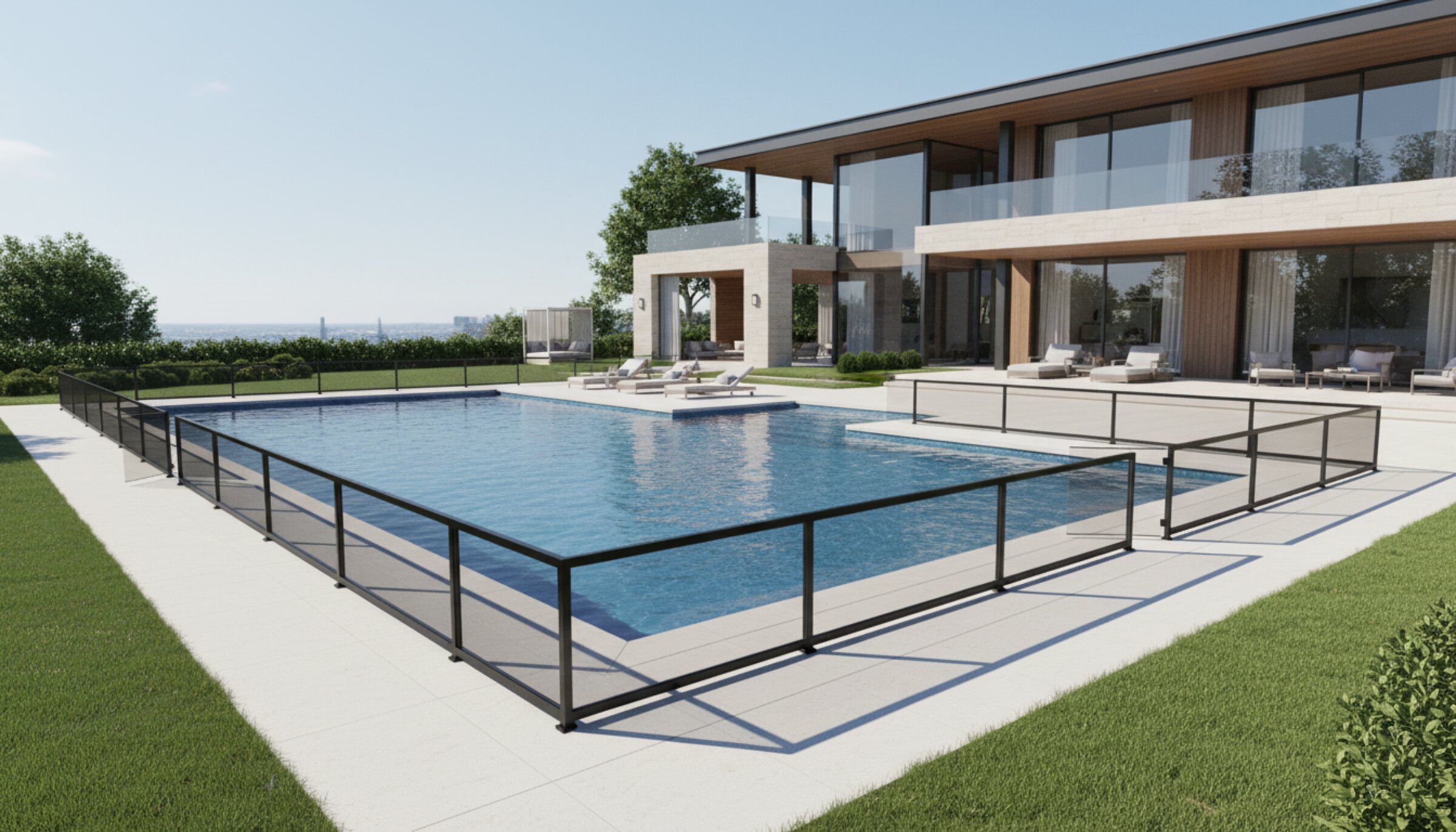
The mounting method is one of the most important decisions in glass railing design. Base shoe (U-channel) systems deliver the ultimate frameless look, while post mount systems provide maximum structural performance. This guide covers the technical and aesthetic differences.
Pros & Cons
Base Shoe (U-Channel)
- No visible posts for frameless aesthetic
- Clean minimalist appearance
- Continuous glass surface
- Premium property value impact
- Modern architectural statement
- Easy glass panel replacement
- Requires robust concrete/steel substrate
- Higher cost (thicker glass)
- More engineering-intensive
- Limited wind load capacity vs. posts
- Minimum concrete thickness required
Post Mount
- Maximum structural rigidity
- Works on more substrate types
- Higher wind load capacity
- Lower glass thickness needed
- Can use thinner/less expensive glass
- Wider spanning capability
- Posts visible between panels
- Less seamless aesthetic
- Posts need finishing to match design
- More hardware visible
- Panel replacement more complex
Feature-by-Feature Comparison
| Feature | Base Shoe (U-Channel) | Post Mount |
|---|---|---|
| Aesthetic | Frameless/floating | Structured/architectural |
| Glass Thickness | 1/2" to 3/4" | 3/8" to 1/2" |
| Substrate Requirement | Concrete or steel (4"+ thick) | Concrete, steel, or reinforced wood |
| Wind Load Performance | Good (glass-dependent) | Excellent (post-assisted) |
| Cost | $250-$500+/ft | $150-$350/ft |
| Installation Complexity | High | Moderate |
| Panel Replacement | Easier (slide out of channel) | More complex (remove clamps/brackets) |
| INFINITYGLASS System | Boundless | Framed |
Best For: Which Should You Choose?
The Verdict
Base shoe systems are the premium choice for luxury installations on concrete or steel substrates where the frameless aesthetic is paramount. Post mount systems are the performance choice for high-wind locations, wood-framed structures, and commercial applications requiring maximum structural rigidity. INFINITYGLASS offers both via the Boundless and Framed product lines.
Frequently Asked Questions
What is a U-channel base shoe?
A U-channel base shoe is an extruded aluminum channel anchored to the floor or deck surface that receives the bottom edge of the glass panel. The glass is secured with compression plates, set screws, and structural silicone or gaskets. The result is a frameless appearance where the glass appears to float from the surface.
Can base shoe railings handle high winds?
Base shoe systems can be engineered for moderate to high wind loads depending on glass thickness and panel dimensions. However, for the highest wind load requirements (coastal high-rise, hurricane zones), post-mounted systems provide superior performance because the posts share structural loads with the glass.
Which INFINITYGLASS systems use which mounting?
The INFINITYGLASS Boundless system uses a proprietary U-channel base shoe for frameless installations. The INFINITYGLASS Framed system uses precision-engineered steel posts for maximum structural performance. Both systems include PE-stamped engineering for code compliance.
How thick does concrete need to be for a base shoe?
Base shoe U-channel systems require a minimum of 4 inches of structural concrete. The anchors must embed at least 3 inches into the concrete to resist the moment loads generated by wind on the glass panels. Thin concrete overlays, pavers, and tile-over-concrete may not provide adequate anchor depth. If your concrete is less than 4 inches, post-mounted systems are the safer engineering choice.
Can a base shoe system be installed on a rooftop?
Yes, but rooftop installations require careful engineering due to high wind exposure at elevation and waterproofing concerns. The base shoe penetrations must be sealed against water infiltration into the roof membrane. Post-mounted systems may be preferred on rooftops because they can be surface-mounted with fewer penetrations and provide superior structural performance in high-wind conditions.
How do drainage and water pooling affect base shoe systems?
Base shoe U-channels can trap water if not properly designed with drainage weep holes. Standing water in the channel accelerates hardware corrosion and can cause freeze-thaw damage in cold climates. Quality base shoe systems include built-in drainage slots and are installed with a slight slope toward drain points. Post-mounted systems do not have this concern because there is no channel to trap water.
Which mounting method is easier to repair?
Base shoe systems are generally easier to repair when a glass panel needs replacement — the set screws are loosened, the damaged panel slides out of the U-channel, and a factory-ordered replacement panel slides in. Post-mounted systems require disassembling clamps, brackets, or rubber gaskets to free and replace the glass. However, post-mounted systems are easier to repair if a structural component (the post) is damaged, since individual posts can be replaced without affecting adjacent panels.
Do base shoe systems require more maintenance?
Base shoe systems require slightly more attention than post-mounted systems. The U-channel should be inspected annually for debris accumulation, drainage blockages, set screw tightness, and structural silicone integrity. Post-mounted systems need annual checks of post connections and clamp tightness. Both are very low-maintenance compared to any non-glass fencing material, but base shoe systems have more hardware points to inspect.
Can I mix base shoe and post mounting on the same project?
Yes, and this is a common design strategy. Use base shoe mounting where the frameless aesthetic is most important (primary view corridors, entertainment areas) and post mounting where maximum structural performance is needed (high-wind sections, longer spans, upper-level balconies). INFINITYGLASS regularly designs hybrid projects using both Boundless and Framed systems on the same property.
More Comparisons
Back to Glass Fencing Guide | Cost Guide | How-To Guides | Solutions | Glossary