Glass Enclosure vs. Screen Enclosure
Glass enclosure vs. screen enclosure for patios, pools, and outdoor spaces. Compare weather protection, views, cost, durability, and year-round usability.
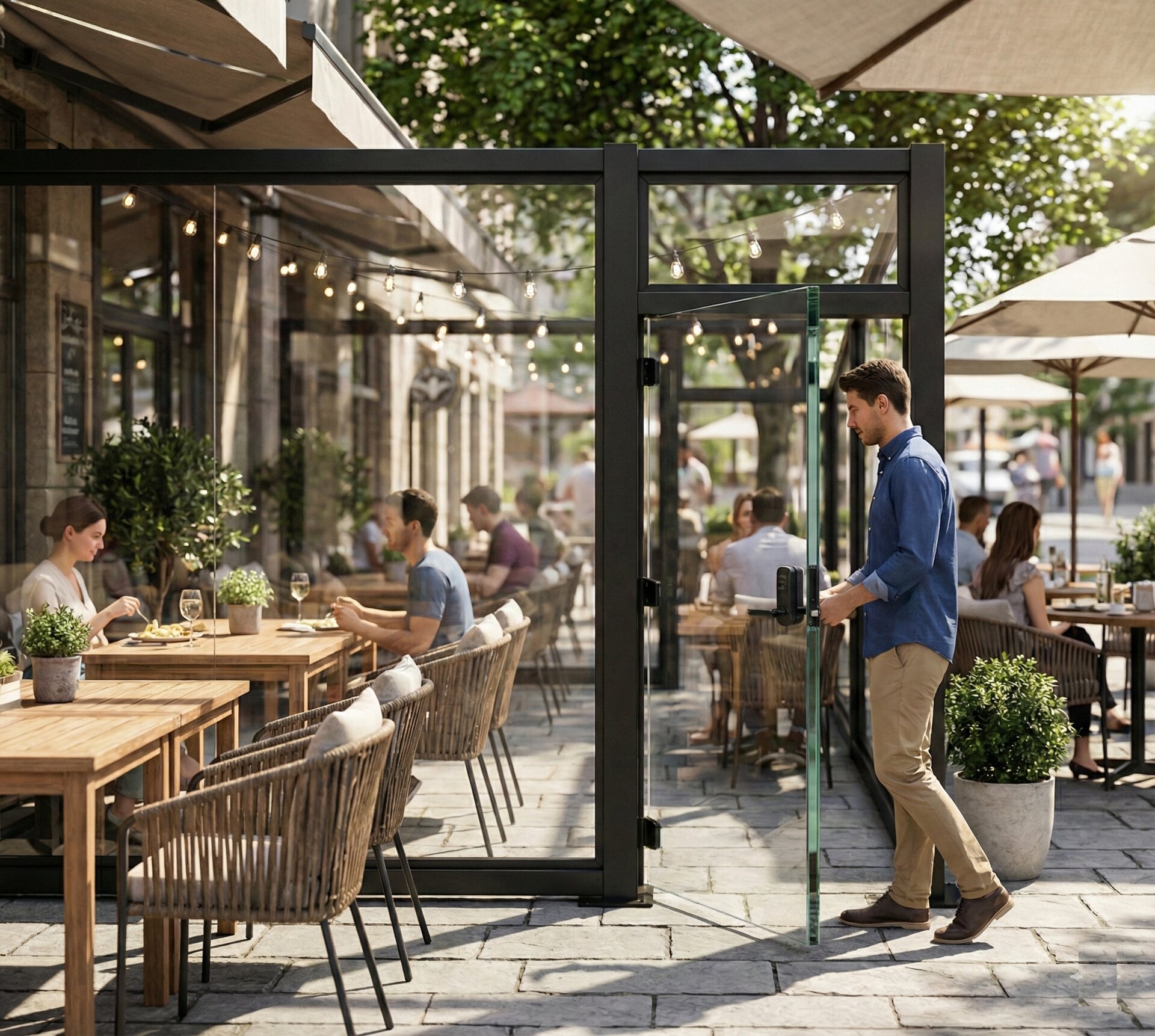
Both glass and screen enclosures extend your usable outdoor space, but they deliver very different experiences. Screen enclosures keep bugs out; glass enclosures create fully protected, climate-controllable environments. This guide compares both for patios, pools, restaurants, and residential applications.
Pros & Cons
Glass Enclosure
- Full weather protection (rain, wind, cold)
- Year-round climate control possible
- Crystal-clear views without mesh
- Hurricane-rated options available
- Superior acoustic insulation
- Increases property value significantly
- Higher cost ($400-$800+/ft)
- Requires HVAC for climate control
- Professional installation required
- Condensation management needed for pool enclosures
- Building permits typically required
Screen Enclosure
- Lower cost ($25-$80/ft)
- Bug and debris protection
- Good airflow and ventilation
- Pool code-compliant barrier
- Faster installation
- May not require building permit in some areas
- No weather protection (rain passes through)
- No climate control possible
- Mesh visible in all views
- Screens tear and degrade (5-10 year replacement)
- Not hurricane-rated
- Does not block wind
- Minimal property value impact
Feature-by-Feature Comparison
| Feature | Glass Enclosure | Screen Enclosure |
|---|---|---|
| Weather Protection | Complete (rain, wind, cold) | Bugs and debris only |
| View Quality | Crystal clear | Mesh-filtered |
| Climate Control | Full HVAC integration | Not possible |
| Year-Round Usability | Yes (all climates) | Warm months only |
| Cost | $400-$800+/ft | $25-$80/ft |
| Hurricane Rating | Available | Not available |
| Lifespan | 30-50+ years | 10-20 years |
| Sound Reduction | Significant (STC 36-45+) | None |
| Property Value | Significant increase | Modest increase |
Best For: Which Should You Choose?
The Verdict
Glass enclosures are a transformative investment that creates genuine year-round living space with climate control, acoustic comfort, and hurricane protection. Screen enclosures are a cost-effective solution for bug protection and pool coverage in warm climates. If your goal is extending your home or business into a year-round outdoor space, glass is the only option that delivers. If you just need to keep mosquitoes out of the pool area, screen is the practical choice.
Frequently Asked Questions
Can a screen enclosure be upgraded to glass?
In most cases, no. Glass enclosures require substantially different structural support, foundations, and engineering compared to screen enclosures. The aluminum framing used for screen enclosures is typically not rated for the weight and wind loads of glass panels. A glass enclosure is a separate engineered system.
Do glass enclosures get hot in summer?
Without HVAC, glass enclosures can get warm in direct sun. However, with proper ventilation (operable panels), shading, and optional HVAC integration, glass enclosures maintain comfortable temperatures year-round. Tinted and low-E glass options also reduce solar heat gain.
Are screen enclosures hurricane-resistant?
No. Standard screen enclosures are not designed to withstand hurricane-force winds and are commonly destroyed during storms. Some manufacturers offer hurricane screen products, but these provide far less protection than impact-rated glass enclosures with laminated glass and structural framing.
How much does a glass enclosure cost compared to screen?
Glass enclosures cost $400-$800+ per linear foot versus $25-$80 per linear foot for screen — approximately 5-15x more. However, glass enclosures create genuine conditioned living space usable year-round, which adds significant square footage value to the home. A 300-square-foot glass enclosure that adds conditioned space at $150-$300/sqft of value can justify the investment through property appreciation alone.
Can a glass enclosure be used year-round in cold climates?
Yes. With proper HVAC integration, insulated framing, and double-pane or triple-pane glass, a glass enclosure functions as a four-season room in any climate. Low-E glass coatings reduce heat loss in winter and solar gain in summer. In northern states, a properly insulated glass enclosure extends the outdoor living season from 5-6 months to all 12 months — an enormous lifestyle upgrade.
Do screen enclosures add home value?
Screen enclosures add modest value — typically $5,000-$20,000 depending on size and condition. However, they do not add conditioned square footage to the home appraisal. Glass enclosures can add significantly more value because they create usable living space that appraisers count as conditioned area. In Florida, screen-enclosed pools are expected by buyers (no added premium), while glass-enclosed spaces command a premium.
How often do screens need replacement?
Standard fiberglass screen mesh lasts 5-10 years before UV degradation causes tears, sagging, and fading. Full re-screening of a typical pool enclosure costs $1,500-$4,000 per replacement cycle. Over 30 years, you may spend $6,000-$16,000 on screen replacements alone. Glass panels require no replacement under normal conditions and last 30-50+ years.
Do glass enclosures block bugs like screens?
Yes — a properly sealed glass enclosure provides complete insect protection, same as a screen enclosure. Glass actually provides superior protection because it has no mesh that can develop tears or gaps over time. The key is proper weather-stripping and sealing of operable panels (sliding doors, louvers). When glass panels are closed, the enclosure is a fully sealed barrier against insects, pollen, and debris.
Can I convert a screen enclosure to glass?
In most cases, a screen enclosure cannot be directly converted to glass because the structural framing is not engineered for the weight and wind loads of glass panels. Screen enclosure aluminum framing is lightweight (designed for mesh that weighs ounces per panel, not glass that weighs pounds per square foot). A glass enclosure requires independent structural engineering and typically new framing — it is a separate project, not an upgrade to existing screen structure.
More Comparisons
Back to Glass Fencing Guide | Cost Guide | How-To Guides | Solutions | Glossary