Glass Fencing vs. Wood Fencing
Glass fencing vs. wood fencing: costs, maintenance, lifespan, views, and best uses compared. Find which material is right for your pool, deck, or property fence.
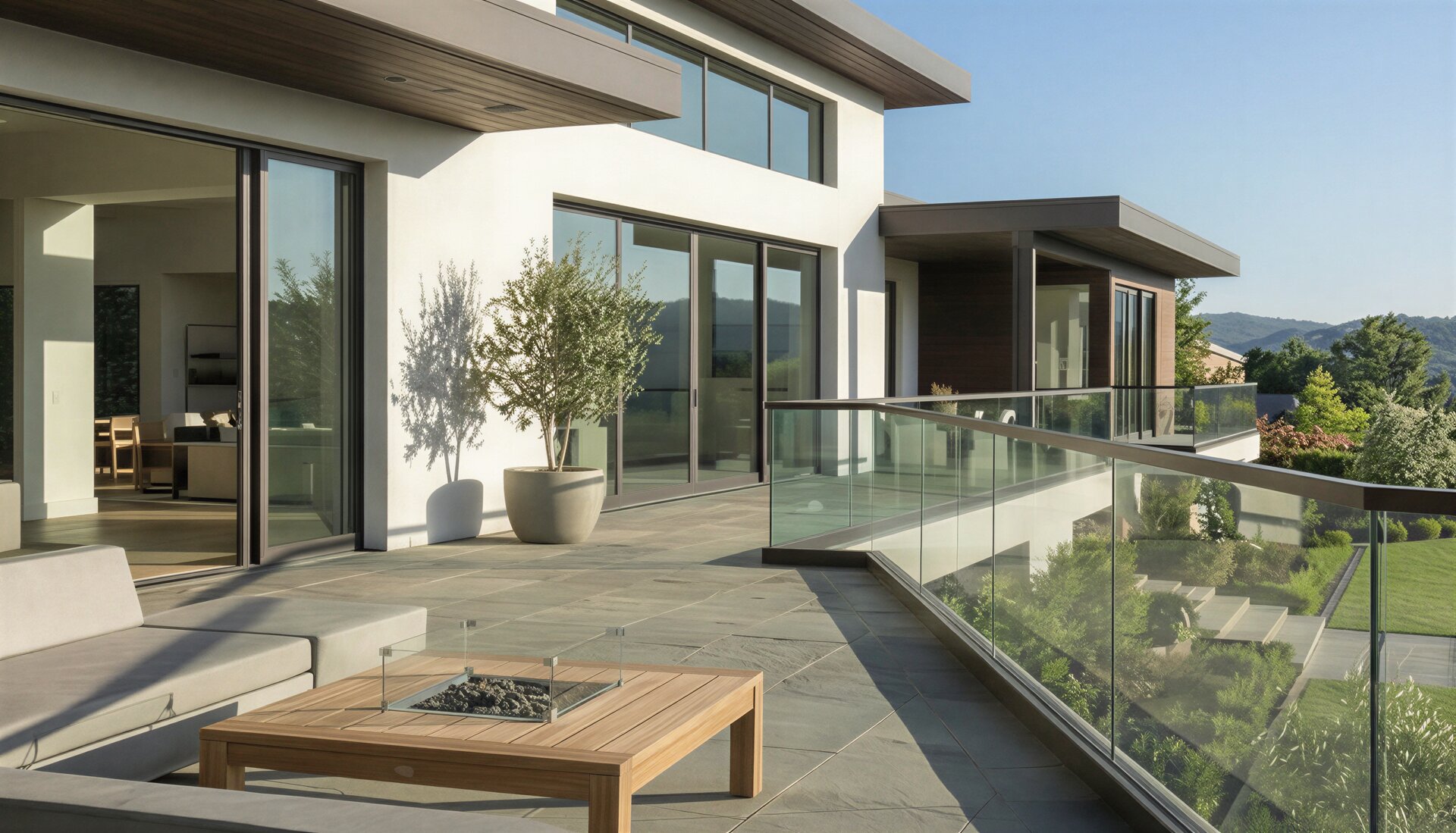
Wood is the most traditional fencing material in America, but glass represents the premium modern alternative. While wood provides privacy and a natural aesthetic, glass offers transparency, durability, and zero maintenance. This guide helps you decide which is right for your project.
Pros & Cons
Glass Fencing
- Full view transparency
- 25-50+ year lifespan
- Zero painting or staining
- Non-climbable for pool safety
- Wind protection without view loss
- Does not warp, rot, or attract pests
- Higher upfront cost
- No privacy (unless frosted)
- Requires professional installation
- Shows fingerprints and water spots
Wood Fencing
- Lowest upfront cost ($25-$80/ft)
- Full privacy options
- Natural, warm aesthetic
- DIY installation possible
- Easy to modify or extend
- Many species and styles available
- 10-20 year lifespan
- Requires regular staining/sealing
- Susceptible to rot, warping, termites
- Blocks all views
- Fire hazard in dry climates
- Fades in UV exposure
Feature-by-Feature Comparison
| Feature | Glass Fencing | Wood Fencing |
|---|---|---|
| View Preservation | Full transparency | None (opaque) |
| Privacy | None (clear) / optional frosted | Full privacy |
| Upfront Cost | $150-$500/ft | $25-$80/ft |
| Lifetime Cost (20 yrs) | $150-$500 total | $75-$240+ (install + maintenance) |
| Lifespan | 25-50+ years | 10-20 years |
| Maintenance | Glass cleaner | Stain/seal every 2-3 years |
| Pest Resistance | Immune | Susceptible (termites, carpenter ants) |
| Fire Resistance | Non-combustible | Combustible |
| UV Resistance | Unaffected | Fades and degrades |
| Property Value | +5-15% | Neutral to negative |
Best For: Which Should You Choose?
The Verdict
Glass fencing and wood serve fundamentally different purposes. Glass is the premium choice for view-critical applications like pools, decks with scenery, and waterfront properties. Wood excels for privacy fencing and large perimeters where budget is primary. Many premium properties use both: glass where views matter, wood where privacy matters.
Frequently Asked Questions
Is glass fencing more expensive than wood long-term?
Not necessarily. While glass has a higher upfront cost, wood requires staining/sealing every 2-3 years ($3-6/ft each time) and typically needs full replacement after 10-20 years. Over a 30-year period, glass often has a lower total cost of ownership, especially when considering the time cost of maintenance.
Can wood fencing be used around pools?
While wood can meet pool barrier height requirements, it has limitations: it blocks supervision sightlines, the horizontal rails can be climbable, and constant moisture exposure accelerates rot. Glass is preferred for pool barriers due to non-climbable surfaces and unobstructed views.
Does glass fencing provide privacy?
Standard clear glass does not provide privacy. Frosted or tinted glass options provide partial privacy while maintaining natural light. For full privacy, wood or composite fencing is more appropriate. Some projects combine glass railings (where views matter) with wood/composite fencing (where privacy matters).
How long does a wood fence last vs. glass?
A well-maintained wood fence lasts 10-20 years, depending on wood species, climate, and maintenance frequency. Cedar and redwood last longest (15-20 years); pressure-treated pine averages 10-15 years. Glass fencing lasts 25-50+ years with virtually no maintenance. Over a 40-year period, you would typically install 2-3 wood fences versus one glass fence installation.
Is wood or glass fencing better in wildfire zones?
Glass is dramatically safer in wildfire-prone areas. Glass is non-combustible and cannot ignite, melt, or contribute to fire spread. Wood fencing is a significant fire hazard — flying embers can ignite dry wood fencing hundreds of feet from the fire front. Many WUI (Wildland-Urban Interface) zones in California, Colorado, and other western states now recommend or require non-combustible fencing materials.
What is the total cost of ownership: wood vs. glass?
Over 30 years, a 100-foot wood fence costs approximately $7,500-$16,000 (initial install $2,500-$8,000 plus staining every 2-3 years at $300-$600 each plus one full replacement at $2,500-$8,000). A 100-foot glass fence costs $15,000-$50,000 upfront with less than $500 in total maintenance over the same period. For premium glass systems, the lifetime cost advantage shifts to glass after 15-20 years.
Can I mix glass and wood fencing on one property?
Yes, and this is a popular hybrid strategy. Use glass where views matter most (pool barrier, scenic overlook, waterfront edge) and wood where privacy is the priority (side yards, utility areas, neighbor-facing sections). The two materials pair well architecturally when the wood is stained in a tone that complements the glass hardware finish.
Does wood fencing attract termites and pests?
Yes. Wood fencing is susceptible to termites, carpenter ants, and wood-boring beetles, especially in warm, humid climates. Pressure-treated wood resists termites but is not immune — treatment effectiveness diminishes over time. Glass fencing is completely immune to pests because glass and metal hardware provide no food source for insects.
Which is better for coastal properties: glass or wood?
Glass is far superior in coastal environments. Salt air accelerates wood rot and decay, shortening wood fence lifespan to 5-10 years near the ocean. Glass is unaffected by salt, and marine-grade 316 stainless steel hardware resists coastal corrosion for decades. Wood also blocks ocean views that drive coastal property values, while glass preserves them.
More Comparisons
Back to Glass Fencing Guide | Cost Guide | How-To Guides | Solutions | Glossary