Frameless vs. Semi-Frameless Glass Railing
Frameless vs. semi-frameless glass railing systems compared: aesthetics, cost, glass thickness, structural performance, and installation differences.
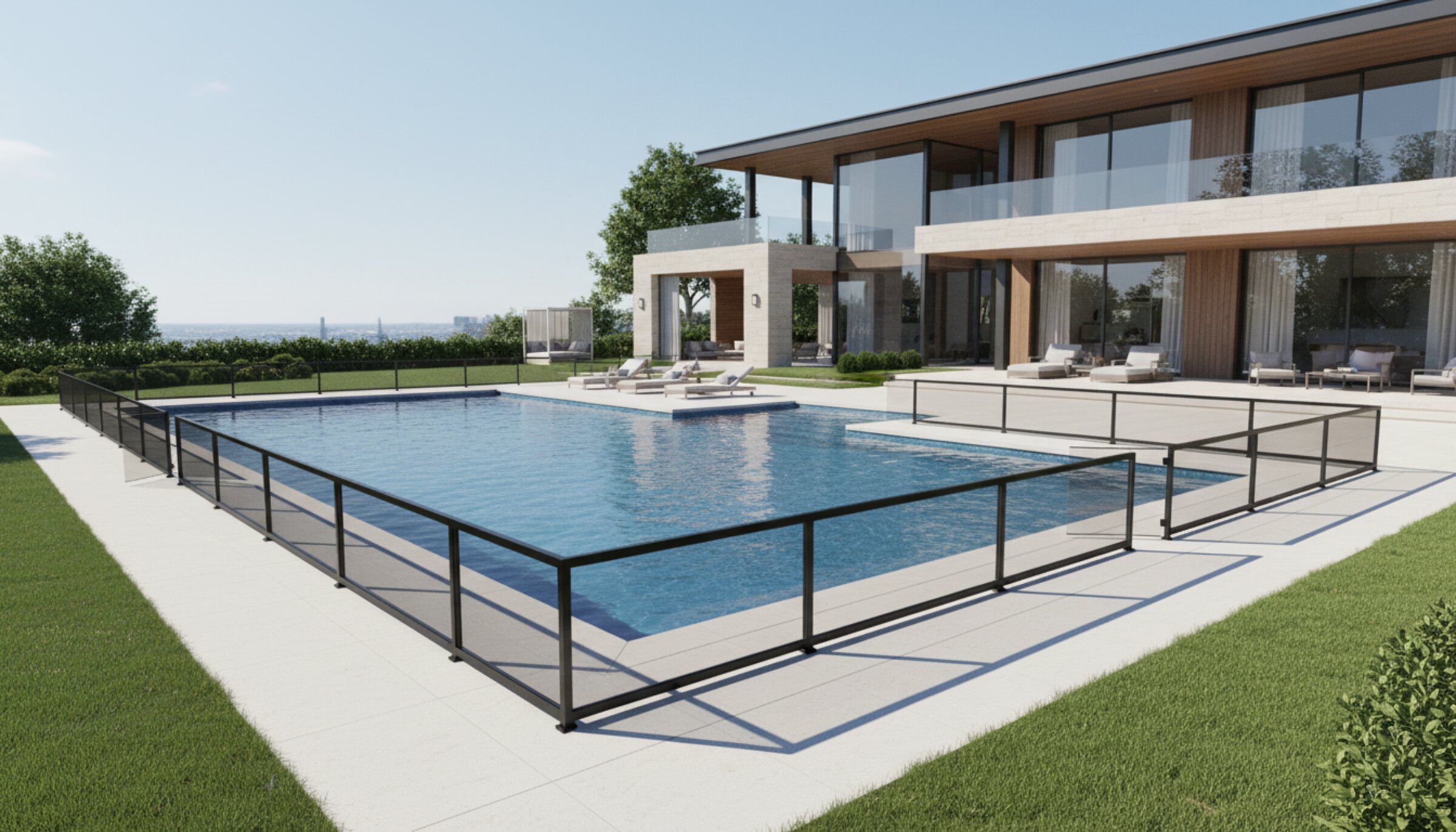
Within the glass railing category, the choice between frameless and semi-frameless is one of the most important decisions. Frameless systems deliver the ultimate minimalist aesthetic; semi-frameless offers a balance of glass beauty and structural economy.
Pros & Cons
Frameless Glass Railing
- Seamless "floating glass" appearance
- No posts to interrupt views
- Maximum transparency
- Highest premium aesthetic
- Best property value impact
- Clean-line modern design
- Higher cost (thicker glass required)
- More complex installation
- Requires robust substrate
- Limited span between supports
Semi-Frameless Glass Railing
- Lower cost than frameless
- Uses thinner glass (3/8"-1/2")
- Posts provide structural support
- Wider span capability
- Easier installation
- Good balance of glass and structure
- Posts are visible between panels
- Less seamless appearance
- Posts require finishing/matching
- Slightly less premium aesthetic
Feature-by-Feature Comparison
| Feature | Frameless Glass Railing | Semi-Frameless Glass Railing |
|---|---|---|
| Aesthetic Impact | Maximum (no posts) | Very good (minimal posts) |
| Glass Thickness Required | 1/2" to 3/4" | 3/8" to 1/2" |
| Cost | $250-$500+/ft | $120-$300/ft |
| Structural Substrate Needs | Robust (concrete or steel) | Moderate (wood compatible) |
| Installation Complexity | High (precision required) | Moderate |
| Wind Load Performance | Good (glass-dependent) | Excellent (post-assisted) |
| Maximum Span | Limited by glass thickness | Wider (posts support spans) |
Best For: Which Should You Choose?
The Verdict
Frameless glass railing delivers the ultimate in modern luxury aesthetics and is the top choice for premium homes and hospitality projects with robust concrete or steel substrates. Semi-frameless is the smart choice for budget-conscious projects, wood-framed structures, and high-wind applications where post support adds structural value.
Frequently Asked Questions
Why is frameless glass railing more expensive?
Frameless systems require thicker glass (1/2" to 3/4" vs. 3/8") because the panels must be self-supporting without posts. The base shoe hardware is more engineered, and installation requires greater precision. The glass alone can cost 50-100% more per panel than semi-frameless.
Can frameless glass railing be installed on a wood deck?
It is possible but requires careful engineering. Wood decks need blocking, through-bolting to structural members, and possibly steel reinforcement at anchor points. Semi-frameless systems with posts are generally more suitable for wood structures due to better load distribution.
Which system does INFINITYGLASS offer?
INFINITYGLASS offers both: the Boundless system (frameless base-mounted) for premium installations, and the Framed system (post-supported) for maximum structural performance. Both systems are engineered to exceed code requirements with PE-stamped drawings.
How much more does frameless cost than semi-frameless?
Frameless glass railing costs $250-$500+ per linear foot versus $150-$350 for semi-frameless — roughly 40-60% more. The cost difference comes from thicker glass panels (1/2" to 3/4" vs. 3/8"), more complex base shoe hardware, tighter installation tolerances, and the need for a concrete or steel substrate capable of supporting the cantilevered glass loads.
Can frameless glass railing withstand hurricane winds?
Frameless systems can be engineered for high winds but have inherent limitations for extreme conditions. The glass panels bear the full wind load without post support, which limits panel size in high-wind zones. For hurricane-rated applications (150+ mph), semi-frameless or post-mounted systems generally perform better because the posts share the wind load with the glass panels. INFINITYGLASS engineers each project for the specific wind zone.
What substrate is needed for frameless glass railing?
Frameless base shoe systems require a minimum 4-inch concrete or structural steel substrate to anchor the U-channel properly. The substrate must handle the moment loads created by wind pressure on the unsupported glass panels. Wood decks, thin concrete overlays, and pavers are generally not suitable for frameless systems. Post-mounted semi-frameless systems work on a wider range of substrates including reinforced wood framing.
Does frameless glass railing require a top cap rail?
Not structurally — frameless systems are designed with the glass as the primary structural element. However, some building codes require a graspable handrail adjacent to stairs. In these cases, a separate wall-mounted or standoff handrail can be installed alongside the frameless glass. For flat guards (balconies, pool barriers), no top rail is required if the glass meets height and strength requirements.
Which style is better for resale value?
Frameless glass railing typically adds more perceived value because the "floating glass" aesthetic is associated with high-end contemporary architecture. In luxury real estate markets, frameless glass railings are featured as a selling point. Semi-frameless with visible posts still adds significant value over non-glass alternatives but does not command the same premium cachet as a fully frameless installation.
How are glass panels replaced in each system?
In base shoe (frameless) systems, panel replacement is relatively straightforward — the set screws are loosened, the damaged panel slides out of the U-channel, and a new panel is inserted. In post-mounted (semi-frameless) systems, replacement requires removing clamps, brackets, or cap rails to free the glass, making it slightly more complex. Both systems use tempered glass that cannot be cut on-site, so replacement panels must be factory-ordered to exact dimensions.
More Comparisons
Back to Glass Fencing Guide | Cost Guide | How-To Guides | Solutions | Glossary