Tempered vs. Laminated Glass for Railings
Tempered glass vs. laminated glass for railings and fencing: strength, safety, cost, code requirements, hurricane performance, and when to use each type.
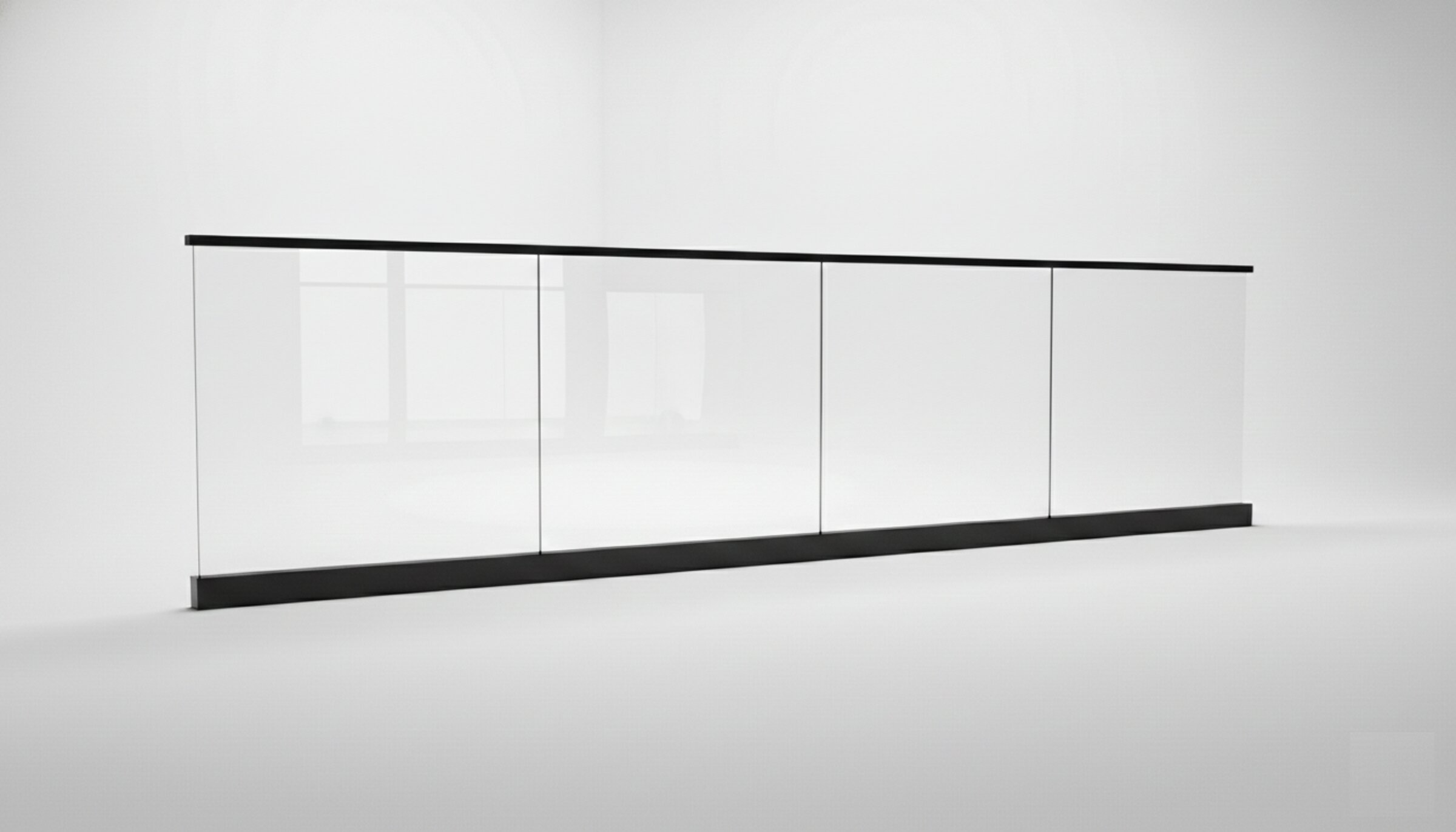
Choosing between tempered and laminated glass for your railing or fencing project affects safety performance, cost, building code compliance, and hurricane resistance. This technical guide explains the differences and when each type is appropriate.
Pros & Cons
Tempered Glass
- 4-5x stronger than standard glass
- Breaks into safe granular pieces
- Lower cost than laminated
- Meets safety glazing standards
- Thinner profile for same strength
- Standard for most railing applications
- Shatters completely when broken
- Cannot be cut or drilled after tempering
- Glass falls out of frame when broken
- Not suitable for hurricane zones alone
- No post-breakage structural capacity
Laminated Glass
- Holds together when broken
- Post-breakage structural capacity
- Required for hurricane zones
- Better acoustic performance
- UV filtering (99%)
- Suitable for overhead and high-risk areas
- Higher cost (interlayer + lamination)
- Heavier per panel
- More expensive to fabricate
- Edge delamination possible if poorly made
- Thicker overall panel dimension
Feature-by-Feature Comparison
| Feature | Tempered Glass | Laminated Glass |
|---|---|---|
| Breakage Behavior | Shatters into granules | Cracks but stays intact |
| Post-Breakage Safety | Glass falls from frame | Glass held by interlayer |
| Strength (vs. annealed) | 4-5x stronger | Varies (depends on configuration) |
| Cost (glass only) | $15-$35/sqft | $30-$60+/sqft |
| Hurricane Rating | Not available alone | Available (with SGP interlayer) |
| Sound Reduction | STC 28-32 | STC 34-45+ |
| UV Blocking | Minimal | 99% (PVB/SGP interlayer) |
| Code Status | Safety glazing | Safety glazing + structural |
Best For: Which Should You Choose?
The Verdict
Tempered glass is the standard choice for most railing and fencing applications, meeting safety requirements at a lower cost. Laminated glass is required for hurricane zones, high-rise post-breakage safety, and noise-sensitive environments. For the highest performance, tempered-laminated with SGP interlayer combines the strengths of both.
Frequently Asked Questions
Which glass type does building code require for railings?
Building codes (IBC, IRC) require safety glazing for railings, which both tempered and laminated glass satisfy. However, specific applications require laminated: hurricane zones (Florida Building Code), overhead glazing, and some high-rise jurisdictions require laminated for post-breakage retention at elevation.
What is tempered-laminated glass?
Tempered-laminated glass combines both technologies: individual glass plies are tempered first, then laminated together with an interlayer. This provides the strength of tempered glass with the post-breakage retention of laminated glass. It is the standard for hurricane-rated applications and high-security installations.
Can I use tempered glass in a hurricane zone?
Tempered glass alone does not pass hurricane impact testing (ASTM E1996) because it shatters completely on impact. Hurricane-rated applications require laminated glass (typically tempered-laminated with SGP interlayer) that holds together after impact and continues to resist wind pressure.
What is the cost difference between tempered and laminated glass?
Laminated glass costs approximately $30-$60+ per square foot versus $15-$35 for tempered — roughly double. The premium covers the interlayer material (PVB or SGP), the lamination process, and typically thicker overall panel dimensions. For a 100-linear-foot railing at 42 inches height, the glass cost difference alone is $5,000-$10,000. Use tempered where code allows; invest in laminated where safety or code requires it.
How do you tell tempered glass from laminated?
Tempered glass is required to have a permanent etch mark (bug) identifying it as safety glass — look for the ANSI Z97.1 or CPSC 16 CFR 1201 marking in one corner. Laminated glass is identifiable by its slightly thicker dimension (two plies plus interlayer) and, when viewed edge-on, the visible interlayer between the glass plies. A professional can also use a polarized light test that reveals stress patterns in tempered glass.
Does laminated glass reduce noise better than tempered?
Yes, significantly. Laminated glass achieves STC ratings of 34-45+ depending on configuration, compared to STC 28-32 for tempered glass of similar thickness. The PVB or SGP interlayer acts as a sound-dampening membrane. For railings near busy roads, airports, or commercial districts, laminated glass provides a noticeable acoustic improvement worth the additional investment.
What happens when each glass type breaks?
Tempered glass shatters entirely into small, relatively harmless granules that fall out of the frame. The barrier function is lost immediately. Laminated glass cracks but the interlayer holds the broken pieces in place — the panel remains in the frame and continues to provide a partial barrier. This post-breakage retention is why laminated is required for high-rise and overhead applications where falling glass poses a serious risk.
Can laminated glass be used for pool fencing?
Yes, and it provides an extra safety margin. If a laminated pool fence panel is damaged, it remains in place rather than collapsing, maintaining the pool barrier until repair. However, for standard residential pool fencing at ground level, tempered glass meets all code requirements at a lower cost. Laminated is recommended for pool fencing in hurricane zones, near sports courts, or where extra impact protection is desired.
What is SGP interlayer vs. PVB?
PVB (polyvinyl butyral) is the standard interlayer — it holds broken glass together and provides good acoustics. SGP (SentryGlas Plus by Trosifol/Kuraray) is a high-performance structural interlayer that is 100x stiffer and 5x stronger than PVB. SGP is required for hurricane-rated applications, structural glass balustrades, and any application where the laminated glass must support loads after breakage. SGP costs approximately 30-50% more than PVB lamination.
More Comparisons
Back to Glass Fencing Guide | Cost Guide | How-To Guides | Solutions | Glossary