Glass Pool Fence vs. Metal Pool Fence
Glass pool fence vs. metal pool fence: safety, visibility, child-proofing, cost, maintenance, and code compliance compared for residential and commercial pools.
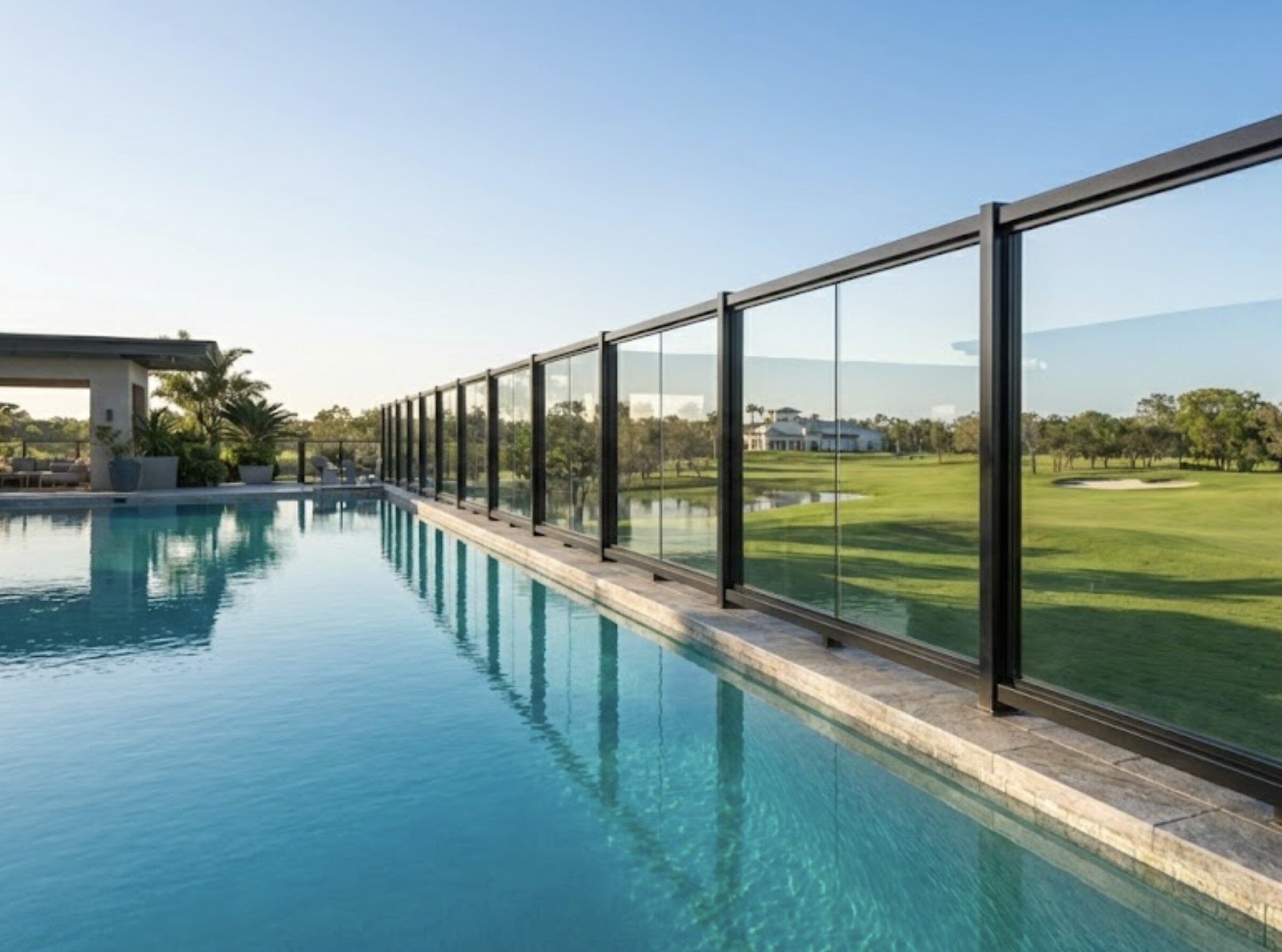
Pool fencing is a critical safety investment required by building codes nationwide. Glass and metal (aluminum or steel) are the two most popular permanent pool barrier materials. This guide compares them specifically for pool applications where child safety, supervision visibility, and code compliance are paramount.
Pros & Cons
Glass Pool Fence
- Non-climbable smooth surface
- Unobstructed swimmer supervision
- Premium aesthetic
- Wind protection around pool
- Does not corrode from pool chemicals
- Increases property value
- Higher cost
- Requires professional installation
- Can show water spots from pool splash
- Heavier than metal alternatives
Metal Pool Fence
- Lower cost ($40-$120/ft)
- Lightweight
- Easy to repair sections
- Multiple color options
- DIY-friendly installation
- Proven code compliance
- Climbable bar design
- Obstructs views of pool
- Can corrode in salt/chemical exposure
- No wind protection
- Industrial appearance
- Does not enhance pool aesthetics
Feature-by-Feature Comparison
| Feature | Glass Pool Fence | Metal Pool Fence |
|---|---|---|
| Swimmer Supervision | Unobstructed view | Partially obstructed by bars |
| Climb Resistance | Non-climbable | Climbable (bars) |
| Pool Chemical Resistance | Excellent | Good (aluminum) to poor (steel) |
| Cost | $200-$500/ft | $40-$120/ft |
| Wind Protection | Complete | None |
| Aesthetic Value | Premium | Functional |
| Code Compliance | Exceeds requirements | Meets requirements |
| Gate Options | Self-closing glass gates | Self-closing metal gates |
Best For: Which Should You Choose?
The Verdict
Glass pool fencing is the gold standard for pool safety and aesthetics. Its non-climbable surface and unobstructed supervision sightlines make it the safest permanent pool barrier available. Metal pool fencing is the budget-practical alternative that meets code requirements at a lower cost. For families with young children and for luxury properties, the glass upgrade is highly recommended.
Frequently Asked Questions
What height does a pool fence need to be?
The IBC and IRC require a minimum 48-inch pool barrier height nationally. California requires 60 inches. Self-closing, self-latching gates with latches at 54 inches minimum are also required. Both glass and metal pool fences are available at code-compliant heights.
Can children climb a glass pool fence?
No. Glass pool fencing has a smooth, continuous surface with no hand- or footholds. This makes it inherently non-climbable, unlike metal bar fencing where the horizontal rails and vertical pickets can be used as a ladder. This is one of the strongest safety arguments for glass pool barriers.
Does pool water damage glass fencing?
Pool water (including chlorinated and saltwater) does not damage glass panels. It can leave mineral deposits (water spots) that are easily cleaned. All INFINITYGLASS pool systems use marine-grade hardware rated for pool chemical environments.
How much does a glass pool fence cost vs. metal?
Glass pool fencing costs $200-$500+ per linear foot installed versus $40-$120 per linear foot for metal (aluminum or steel). For a typical 80-foot pool perimeter, that translates to $16,000-$40,000 for glass versus $3,200-$9,600 for metal. The glass premium buys non-climbable safety, unobstructed supervision, wind protection, and a 5-15% increase in property value.
Do metal pool fences corrode from chlorine?
Standard aluminum pool fencing resists chlorine corrosion reasonably well but can develop white oxidation spots over time. Steel pool fencing is more vulnerable — even powder-coated steel can corrode from continuous chlorine exposure within 5-10 years. Saltwater pools are even more corrosive to metal. Glass is completely immune to pool chemical corrosion, and INFINITYGLASS uses 316 marine-grade stainless steel hardware specifically rated for pool environments.
Which pool fence is easier to see through for supervision?
Glass pool fencing provides 100% unobstructed visibility at any distance and any angle. Metal bar fencing obstructs 25-40% of the view depending on bar spacing and design. At distances beyond 20 feet, metal bars can make it difficult to clearly see a submerged swimmer — a critical safety limitation. The American Academy of Pediatrics emphasizes constant visual supervision as the primary drowning prevention strategy.
Can metal pool fence bars be climbed by toddlers?
Yes. Metal pool fences with horizontal rails and vertical bars provide hand- and footholds that children as young as 18 months have used to climb over. Pool barrier codes require non-climbable designs, but enforcement varies and many older metal fences have climbable elements. Glass pool fencing is inherently non-climbable because the smooth, continuous surface provides zero grip points.
How long do glass and metal pool fences last?
Glass pool fencing lasts 25-50+ years with minimal maintenance (periodic glass cleaning and annual hardware inspection). Aluminum pool fencing lasts 15-25 years before oxidation, loose joints, and worn powder coating necessitate replacement. Steel pool fencing may need replacement sooner in pool environments due to corrosion. Over a 40-year period, you would likely replace a metal pool fence 1-2 times versus zero for glass.
Does a glass pool fence affect insurance rates?
Some homeowners insurance providers offer premium reductions for pool barriers that exceed minimum code requirements — glass pool fencing qualifies due to its non-climbable design and superior visibility. While the reduction varies by carrier (typically 2-5% of the pool-related premium increase), it is worth asking your insurer. No specific discount exists for standard metal pool fencing that merely meets minimum code.
More Comparisons
Back to Glass Fencing Guide | Cost Guide | How-To Guides | Solutions | Glossary